
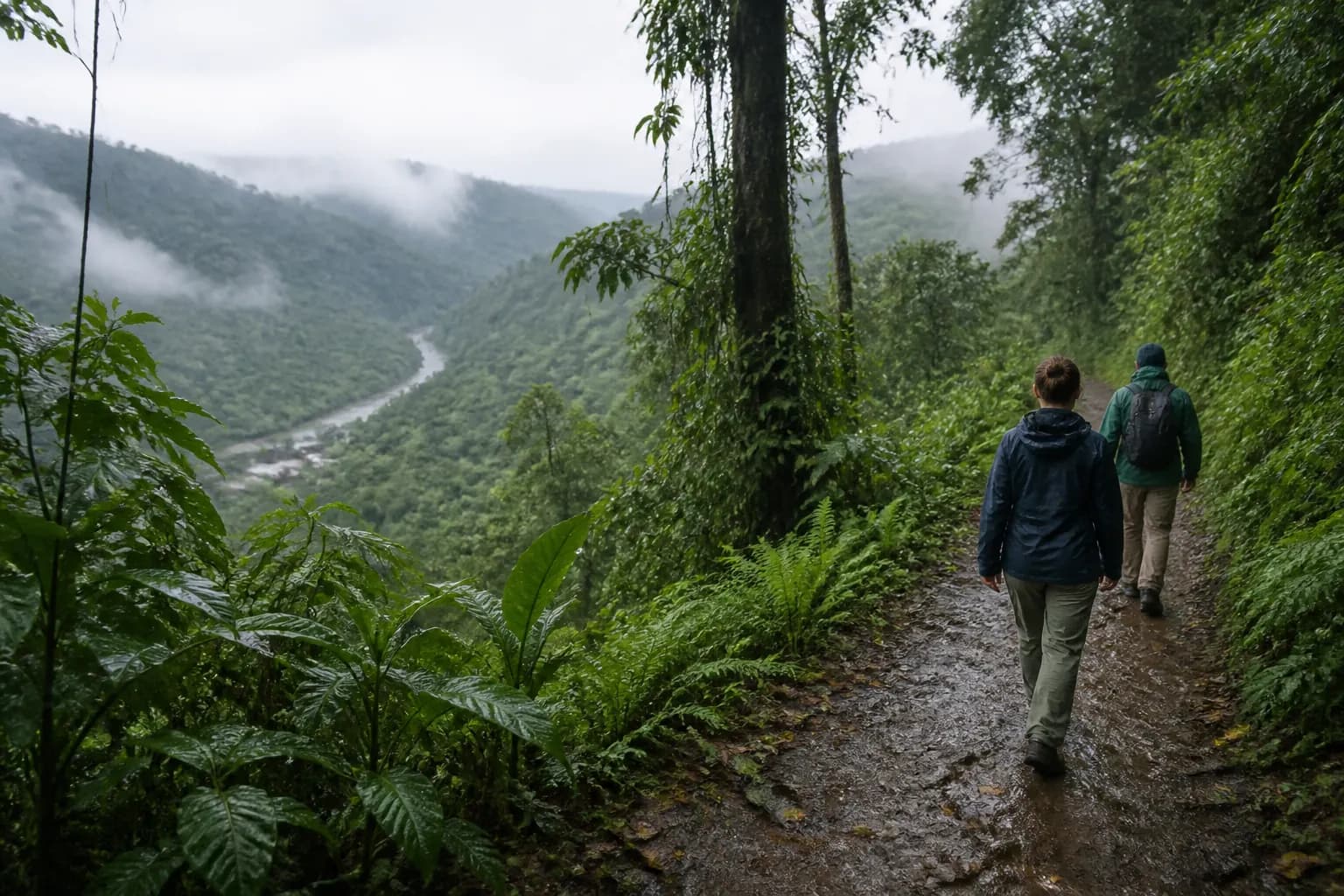
Bukit Lawang is a year-round rainforest destination
The best time to visit Bukit Lawang for orangutan trekking is the month that fits your travel dates, fitness, and tolerance for tropical rain. The rainforest is open year-round, and orangutan sightings should never be treated as guaranteed.
There is no single perfect month for every traveler. Bukit Lawang is humid and tropical throughout the year, and rain can happen in any season. The better question is how much flexibility you want and how comfortable you are with mud, heat, and changing river conditions.
For many European guests, the best itinerary includes one buffer night before the trek and one after it. That reduces stress if flights, road transfers, or weather slow the journey.
Quick Answer: May to September is the driest and most popular period for Bukit Lawang orangutan trekking, offering firm trails and reliable tube rafting. March, April, and October provide pleasant conditions with fewer crowds. Orangutan sightings occur year-round.
Month-by-month weather and trekking conditions
North Sumatra has no true dry season, only wetter and drier stretches. Rain usually arrives as heavy afternoon or evening downpours rather than all-day drizzle, so most trekking mornings stay walkable year-round.
Use the table as a planning shortcut, not a forecast. River level, mud, and leech activity track recent rainfall more closely than the calendar month.
| Months | Rainfall pattern | What it means on the trail |
|---|---|---|
| January to February | Wet, tail of the rainy season | Green forest, muddy descents, high river, rafting often cancelled |
| March to April | Easing rain | Good balance of quiet trails and active wildlife, fewer visitors |
| May to July | Driest stretch | Firmest trails, most reliable tube rafting, peak European booking season |
| August to September | Drier with short showers | Strong trekking conditions, busiest months in the village |
| October to November | Rain returning | Humid and lush, muddier trails, flexible dates recommended |
| December | Wettest month | Heaviest rain and highest river, best for travelers who do not mind mud |
If firm trails and tube rafting matter most, aim for May to September. If you want quieter trails and lower prices on flights and rooms, March, April, and October are the strongest value.
- Driest and most reliable: May to September.
- Quietest with good conditions: March, April, October.
- Wettest: November to February, still fully trekkable.
- Orangutan sightings do not follow a season; they follow fruiting trees and luck.
Does the season change your chance of seeing orangutans?
Not in the way most travelers expect. Orangutans in Gunung Leuser move toward fruiting trees, and fruiting is patchy across the year rather than tied to one tourist season. Guides read fresh nests and feeding signs on the day, which matters far more than the month you booked.
Trek length has a bigger effect than season. A 2-day or 3-day trek covers more forest and more hours in habitat than a 4-hour walk, so it simply gives more chances. No ethical operator can guarantee a sighting in any month.
- Longer trek, more forest hours, more chances.
- Early morning starts are consistently better than midday.
- Fruiting trees drive movement more than rainfall does.
- Sightings are never guaranteed, in any season.
Planning around European holidays
Summer holidays, Easter breaks, Christmas, and New Year can be attractive for long-distance travel, but they can also make flights and accommodation more competitive. If you need a private guide, family-friendly pace, or specific room type, enquire early.
A shoulder-season approach often works well: fewer time pressures, more flexible flight choices, and easier room availability in Bukit Lawang.
Rain, river levels, and route decisions
Rain does not automatically cancel a trek. It can make the forest beautiful and active, but it also changes mud, river crossings, leeches, and tube rafting safety. A responsible guide chooses the route based on the conditions of the day.
If tube rafting is important to you, remember that river return always depends on water level and safety judgment.
How long should you stay?
- One full day in Bukit Lawang is enough for a short trek only.
- Three nights in the area gives space for a 2-day trek plus recovery.
- Four or five nights works better for a 3-day trek, village time, and a less rushed transfer.
Seasonality & weather FAQ
When is the best month to see orangutans in Bukit Lawang?
Orangutans can be seen year-round in Gunung Leuser National Park because sightings depend on fruiting trees rather than weather seasons. However, May to September offers the most comfortable trail conditions.
Does it rain all day during the rainy season in Sumatra?
No. Tropical rain in North Sumatra usually falls as intense afternoon or late evening downpours lasting 1 to 2 hours, meaning mornings are almost always clear for hiking.
Can jungle treks be cancelled due to heavy rain?
Treks proceed in rain with proper ponchos, but river tube rafting may be temporarily delayed or replaced with walking if river water levels exceed safety margins.
Is Bukit Lawang crowded during peak European summer holidays?
July and August are the busiest months. To ensure a private pace and secure your preferred riverside camp, booking 3 to 6 weeks in advance is highly recommended.
Ready to compare trek options?
Use the booking pages to choose a route, confirm transport from Medan, and send your dates before paying a deposit.