Essential Information for Bukit Lawang Jungle Trekking
Use this page before booking flights, packing your bag, or choosing between a day trek and an overnight jungle package. It is written for travelers coming from Europe who want clear expectations before arriving in North Sumatra.
Wildlife encounters follow no-touch and no-feeding rules
Before you book
Share your travel dates, group size, fitness level, preferred trek length, accommodation needs, and whether you need transport from Medan or Kuala Namu International Airport.
For multi-day treks, tell the guide about food restrictions, allergies, medical concerns, and whether anyone in the group has limited hiking experience.
A 4-hour or 1-day trek suits travelers with limited time.
A 2-day or 3-day trek gives more time for camp life and river return.
Private packages are best for couples, families, photographers, and travelers who want a quieter pace.
Getting to Bukit Lawang
Most international travelers arrive through Medan and continue by private car, shared transport, or public bus to Bukit Lawang. The final road can be slow, so plan arrival time with some flexibility.
If you are flying from Europe, avoid scheduling a jungle trek on the same day as a long-haul arrival. A night in Medan or Bukit Lawang makes the first trekking day safer and more enjoyable.
Main arrival city: Medan, North Sumatra.
Common meeting point: Bukit Lawang village.
Ask for transport help before arrival if you want a smoother transfer.
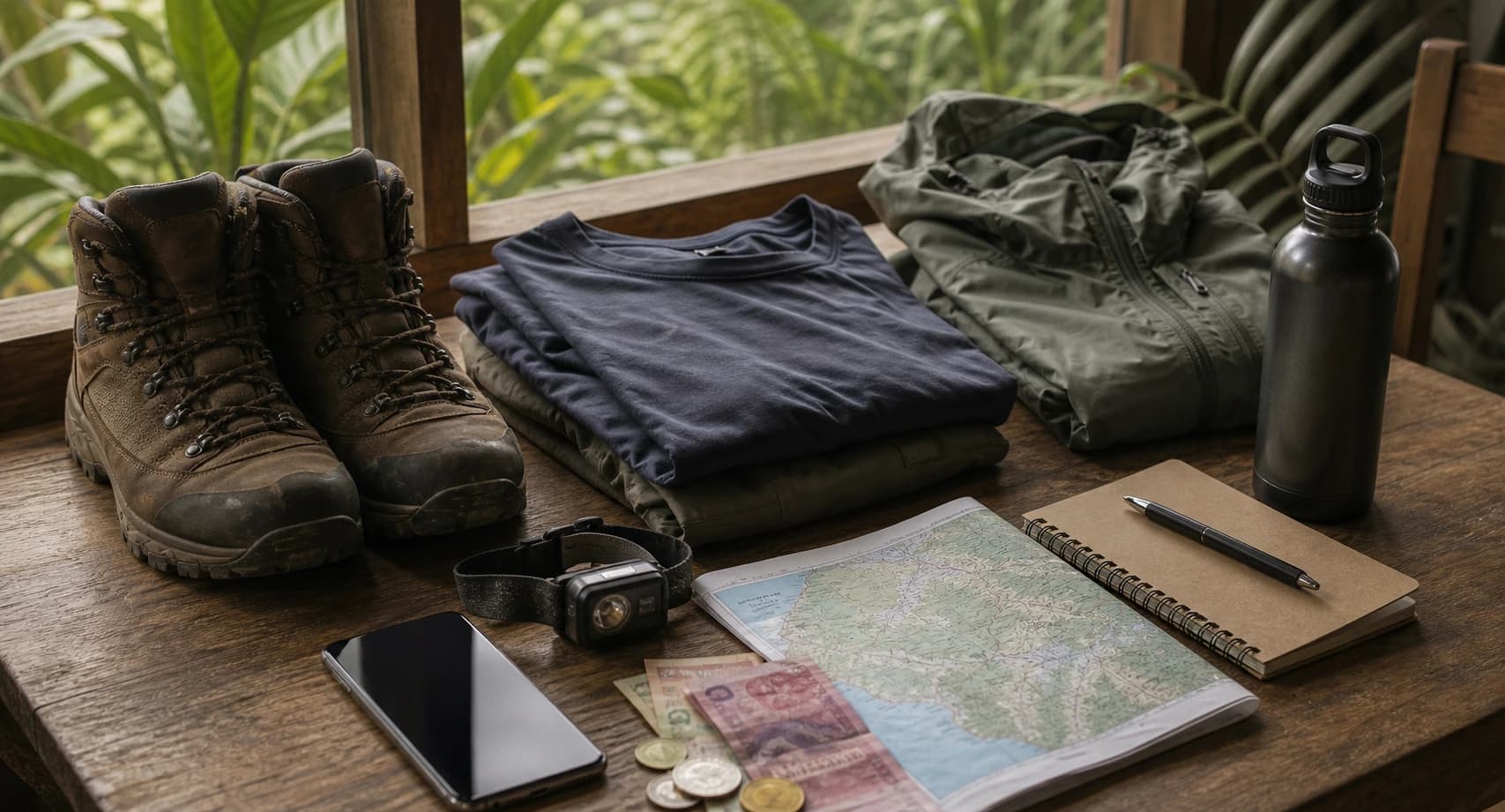
What to pack
Pack light. Overnight treks are easier when your main luggage stays at your guesthouse and you carry only the essentials into the forest.
Walking shoes or hiking boots with grip
Quick-dry clothes, spare socks, and a light rain jacket
Mosquito repellent, sunscreen, small towel, and personal medicine
Reusable water bottle, headlamp or flashlight, and a small dry bag
Cash in Indonesian rupiah for village expenses and tips
Food, water, and accommodation
Jungle food is usually simple and fresh: fruit, rice, vegetables, eggs, noodles, fish or chicken, tea, and coffee. Let your guide know early if you need vegetarian, vegan, halal, gluten-free, or allergy-aware meals.
Overnight camps are basic. Expect a simple shelter, sleeping mat, shared camp area, river washing, and rainforest sounds at night.
Fitness, weather, and safety
Bukit Lawang trails can be steep, humid, slippery, and muddy after rain. A medium fitness level is enough for many short treks, while 3-day to 5-day routes are better for active travelers.
The guide can adjust pace and route, but guests should be honest about injuries, vertigo, heat sensitivity, or limited hiking experience.
Bring travel insurance that covers trekking activities.
Follow your guide during river crossings and steep descents.
Tube rafting depends on river level and safety conditions.
Responsible wildlife rules
The forest is not a zoo. Orangutans, gibbons, macaques, birds, reptiles, and insects move freely, so sightings can never be guaranteed.
Ethical trekking means keeping distance, never feeding wildlife, never touching orangutans, avoiding flash photography, and leaving the guide to manage every encounter.
Deposits, payments, and cancellation
The booking form can calculate a 30% PayPal deposit from your selected package and group size. For now, guests can send the deposit manually to the PayPal email shown on the form.
After payment, send the PayPal reference by WhatsApp or include it in your booking notes. The remaining balance is handled separately after the trip details are confirmed.
The remaining balance can be paid in cash when you meet the guide team in Bukit Lawang, or 2 days before departure after final payment instructions are confirmed by email.
If plans change, contact the guide as early as possible. Local teams buy food and organize staff before multi-day treks, so late cancellations can affect people in the village.
Travel documents and health
Check your passport validity, Indonesia entry requirements, health advice, and insurance terms before leaving Europe. Rules can change, so confirm current requirements with official sources before departure.
Bring personal medication in original packaging and tell your guide about any condition that could matter during heat, hiking, river travel, or overnight camping.
Bukit Lawang trekking FAQ
What should I pack for a Bukit Lawang jungle trek?
Walking shoes with grip, quick-dry clothes, spare socks, a light rain jacket, mosquito repellent, sunscreen, a small towel, personal medicine, a reusable water bottle, a headlamp, a dry bag, and cash in Indonesian rupiah.
How do I get from Medan to Bukit Lawang?
Most travelers arrive through Medan or Kualanamu International Airport and continue by private car, shared transport, or public bus. The road is slow, so plan around four to five hours and avoid trekking on the same day as a long-haul arrival.
How fit do I need to be for Bukit Lawang trekking?
Trails can be steep, humid, slippery, and muddy after rain. A medium fitness level is enough for short treks. The 3-day to 5-day routes are better suited to active travelers.
Are orangutan sightings guaranteed in Bukit Lawang?
No. The forest is habitat, not a zoo. Ethical trekking means keeping distance, never feeding or touching wildlife, avoiding flash photography, and letting the guide manage every encounter.
How much deposit is needed to book a trek?
The booking form calculates a 30% PayPal deposit from your selected package and group size. The balance can be paid in cash when you meet the guide team in Bukit Lawang, or 2 days before departure.
What food is available on multi-day treks?
Jungle meals are simple and fresh: fruit, rice, vegetables, eggs, noodles, fish or chicken, tea, and coffee. Tell your guide early if you need vegetarian, vegan, halal, gluten-free, or allergy-aware meals.