
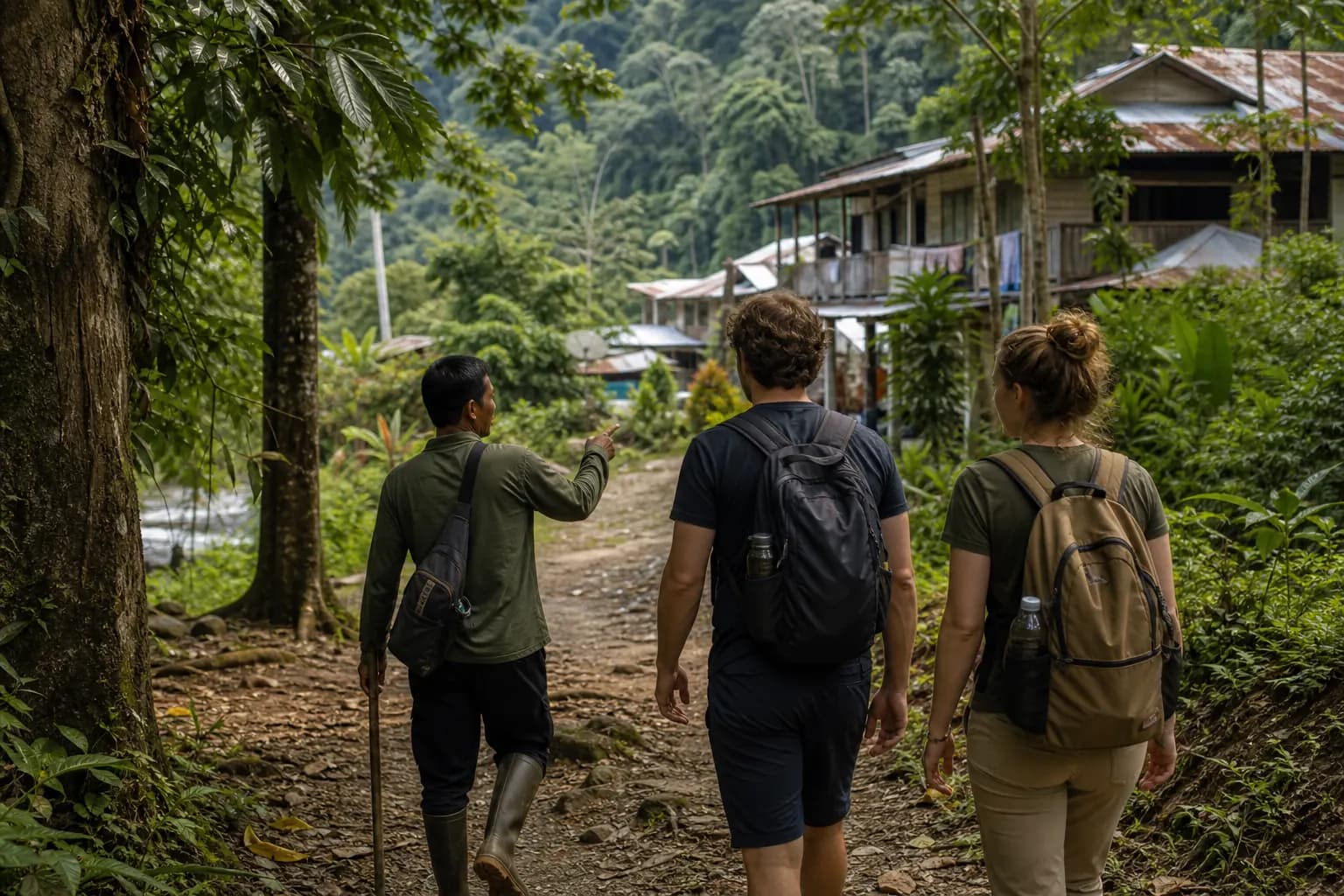
The best encounter is still wild
Orangutan trekking should never turn wildlife into a guaranteed show. The most meaningful encounters happen when guests keep distance, stay quiet, follow the guide, and accept that animals decide where they move.
No feeding and no touching are not just polite rules. Feeding changes animal behavior, increases conflict risk, and can expose wildlife to human illness. Touching is unsafe for both people and orangutans.
Why local guide income matters
Conservation becomes stronger when local communities earn a fair living from keeping the forest alive. Guides, cooks, drivers, guesthouses, farms, and village services all become part of the travel economy.
That is why selected packages should do more than pay for a walk. The vision is to reserve part of travel income for conservation-minded action and local benefit around Bukit Lawang.
What responsible guests can do
- Choose a guide who explains wildlife rules before entering the forest.
- Do not ask guides to get closer for photos.
- Carry rubbish out of the forest.
- Use refillable bottles where practical.
- Ask how your package supports local people and conservation work.
Better questions before booking
Instead of asking only whether orangutans are guaranteed, ask how the trek handles distance, food, camp waste, river safety, and local staffing. Those answers reveal the quality of the experience.
A responsible trek may feel slower, but that slower pace is exactly what protects the forest experience visitors came to see.
Ready to compare trek options?
Use the booking pages to choose a route, confirm transport from Medan, and send your dates before paying a deposit.